Chinese Gender Predictor Chart (2025–2027)
The traditional Chinese gender chart is a grid of the mother's lunar age at conception (18 to 45) against the lunar month of conception (1 to 12). Each of its 336 cells says boy or girl. The full table is below. You need the lunar calendar to find your row and column, and the year guide shows how for 2025, 2026 and 2027.
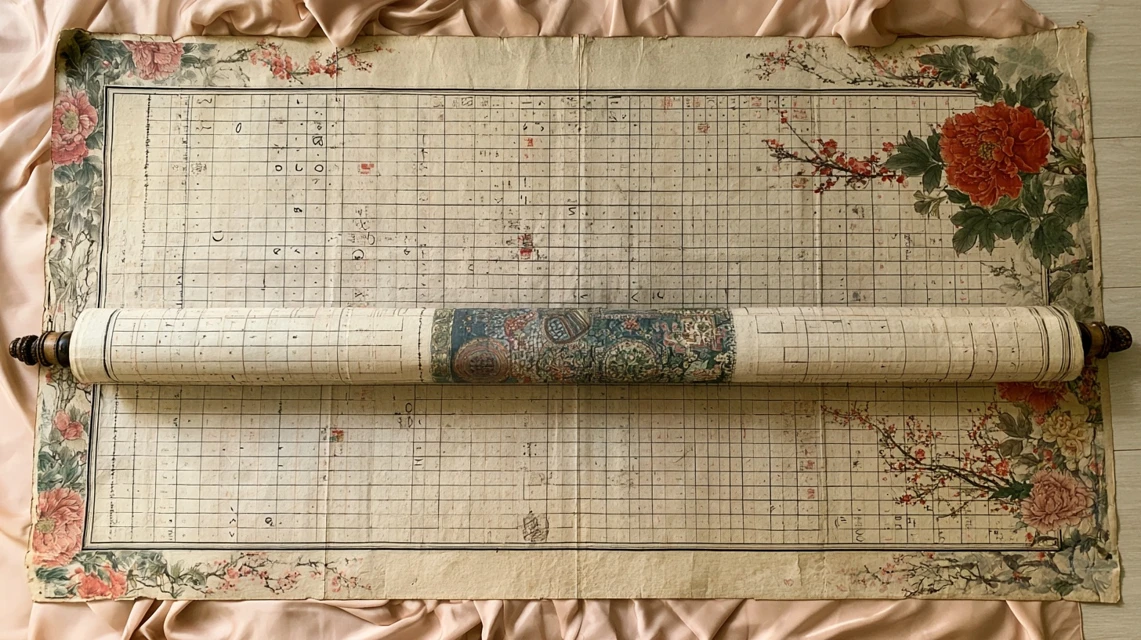
For entertainment only. The Chinese gender chart is a folk tradition with no scientific basis. In a Swedish study of about 2.84 million births it did no better than chance: it was right about half the time (around 50%), the same as tossing a coin. It is not medical advice, and it should not be used for medical or family-planning decisions.
The chart
The chart below is the same fixed table in every year. Switching the year changes only the calendar notes and the example, because each year's Lunar New Year and leap month fall on different dates.
Finding your place on the chart in 2025
Lunar New Year 2025 falls on January 29, 2025 (Year of the Snake). January 1 to 28, 2025 still belong to lunar year 2024. Its 12th month began on December 31, 2024. Lunar year 2025 has a leap 6th month, from July 25 to August 22, 2025. This site reads it as month 6, the same as the regular 6th month (June 25 to July 24, 2025).
Worked example. Conception date August 1, 2025. The mother was born on June 15, 1995, which falls in lunar year 1995. Conception falls in lunar year 2025, so her lunar age is 2025 minus 1995 plus 1, which is 31. The lunar month that contains the conception date began on July 25, 2025: it is month 6 (the leap 6th month, read as month 6). Row 31, column 6 of the chart says girl.
Finding your place on the chart in 2026
Lunar New Year 2026 falls on February 17, 2026 (Year of the Horse). January 1 to February 16, 2026 still belong to lunar year 2025: the 11th month runs from December 20, 2025 and the 12th month from January 19, 2026. Lunar year 2026 has no leap month.
Worked example. Due date October 1, 2026. Subtract 266 days to estimate conception: January 8, 2026. The mother was born on September 10, 1992, which falls in lunar year 1992. Conception falls in lunar year 2025, so her lunar age is 2025 minus 1992 plus 1, which is 34. The lunar month that contains the conception date began on December 20, 2025: it is month 11. Row 34, column 11 of the chart says boy.
Finding your place on the chart in 2027
Lunar New Year 2027 falls on February 6, 2027 (Year of the Goat). January 1 to February 5, 2027 still belong to lunar year 2026. Its 12th month began on January 8, 2027. Lunar year 2027 has no leap month.
Worked example. Conception date March 20, 2027. The mother was born on December 5, 1998, which falls in lunar year 1998. Conception falls in lunar year 2027, so her lunar age is 2027 minus 1998 plus 1, which is 30. The lunar month that contains the conception date began on March 8, 2027: it is month 2. Row 30, column 2 of the chart says girl.
| Lunar age | Lunar month 1 | Lunar month 2 | Lunar month 3 | Lunar month 4 | Lunar month 5 | Lunar month 6 | Lunar month 7 | Lunar month 8 | Lunar month 9 | Lunar month 10 | Lunar month 11 | Lunar month 12 |
|---|---|---|---|---|---|---|---|---|---|---|---|---|
| 18 | Girl | Boy | Girl | Boy | Boy | Boy | Boy | Boy | Boy | Boy | Boy | Boy |
| 19 | Boy | Girl | Boy | Girl | Girl | Boy | Boy | Boy | Boy | Boy | Girl | Girl |
| 20 | Girl | Boy | Girl | Boy | Boy | Boy | Boy | Boy | Boy | Girl | Boy | Boy |
| 21 | Boy | Girl | Girl | Girl | Girl | Girl | Girl | Girl | Girl | Girl | Girl | Girl |
| 22 | Girl | Boy | Boy | Girl | Boy | Girl | Girl | Boy | Girl | Girl | Girl | Girl |
| 23 | Boy | Boy | Girl | Boy | Boy | Girl | Boy | Girl | Boy | Boy | Boy | Girl |
| 24 | Boy | Girl | Boy | Boy | Girl | Boy | Boy | Girl | Girl | Girl | Girl | Girl |
| 25 | Girl | Boy | Boy | Girl | Girl | Boy | Girl | Boy | Boy | Boy | Boy | Boy |
| 26 | Boy | Girl | Boy | Girl | Girl | Boy | Girl | Boy | Girl | Girl | Girl | Girl |
| 27 | Girl | Boy | Girl | Boy | Girl | Girl | Boy | Boy | Boy | Boy | Girl | Boy |
| 28 | Boy | Girl | Boy | Girl | Girl | Girl | Boy | Boy | Boy | Boy | Girl | Girl |
| 29 | Girl | Boy | Girl | Girl | Boy | Boy | Boy | Boy | Boy | Girl | Girl | Girl |
| 30 | Boy | Girl | Girl | Girl | Girl | Girl | Girl | Girl | Girl | Girl | Boy | Boy |
| 31 | Boy | Girl | Boy | Girl | Girl | Girl | Girl | Girl | Girl | Girl | Girl | Boy |
| 32 | Boy | Girl | Boy | Girl | Girl | Girl | Girl | Girl | Girl | Girl | Girl | Boy |
| 33 | Girl | Boy | Girl | Boy | Girl | Girl | Girl | Boy | Girl | Girl | Girl | Boy |
| 34 | Boy | Girl | Boy | Girl | Girl | Girl | Girl | Girl | Girl | Girl | Boy | Boy |
| 35 | Boy | Boy | Girl | Boy | Girl | Girl | Girl | Boy | Girl | Girl | Boy | Boy |
| 36 | Girl | Boy | Boy | Girl | Boy | Girl | Girl | Girl | Boy | Boy | Boy | Boy |
| 37 | Boy | Girl | Boy | Boy | Girl | Boy | Girl | Boy | Girl | Boy | Girl | Boy |
| 38 | Girl | Boy | Girl | Boy | Boy | Girl | Boy | Girl | Boy | Girl | Boy | Girl |
| 39 | Boy | Girl | Boy | Boy | Boy | Girl | Girl | Boy | Girl | Boy | Girl | Girl |
| 40 | Girl | Boy | Girl | Boy | Girl | Boy | Boy | Girl | Boy | Girl | Boy | Girl |
| 41 | Boy | Girl | Boy | Girl | Boy | Girl | Boy | Boy | Girl | Boy | Girl | Boy |
| 42 | Girl | Boy | Girl | Boy | Girl | Boy | Girl | Boy | Boy | Girl | Boy | Girl |
| 43 | Boy | Girl | Boy | Girl | Boy | Girl | Boy | Girl | Boy | Boy | Boy | Boy |
| 44 | Boy | Boy | Girl | Boy | Boy | Boy | Girl | Boy | Girl | Boy | Girl | Girl |
| 45 | Girl | Boy | Boy | Girl | Girl | Girl | Boy | Girl | Boy | Girl | Boy | Boy |
B the chart says boyG the chart says girlRows: mother's lunar age at conception. Columns: lunar month of conception.
How the chart is put together
The rows are the mother's lunar age at the time of conception. In the traditional count a baby is 1 at birth, and everyone gets a year older at Lunar New Year rather than on their birthday. The columns are the months of the Chinese lunar calendar. A lunar month begins on the day of the new moon and lasts 29 or 30 days, so lunar month 1 usually starts in late January or February.
The chart is often called the Qing palace chart, after a popular legend that it was kept in the imperial palace in Beijing. The table itself has been copied widely in Chinese and English.

To read it, find the mother's lunar age in the left column, move across to the lunar month of conception, and read the letter: B for boy, G for girl. The calculator does the conversion and marks the cell for you.
A complete example
Mother born June 15, 1995; conception August 1, 2025
Conception date August 1, 2025. The mother was born on June 15, 1995, which falls in lunar year 1995. Conception falls in lunar year 2025, so her lunar age is 2025 minus 1995 plus 1, which is 31. The lunar month that contains the conception date began on July 25, 2025: it is month 6 (the leap 6th month, read as month 6). Row 31, column 6 of the chart says girl.
The calculator gives the same answer: "The traditional chart says: Girl."

Common mistakes and limits
- Using Western age. A mother who is 29 by her birthdays is usually 30 or 31 in lunar age. Using 29 reads the wrong row.
- Using the calendar month. August 1, 2025 is in the eighth month of the Western calendar but in lunar month 6.
- Using the due date as the conception date. The due date comes many months later, so it falls in a different column.
- Expecting the chart to be right. It is a folk tradition. A large study found it matched about half of births, the same as guessing.
- Ages outside 18 to 45. The chart has no row for them.
Questions about the chart
Does the chart change every year?
No. The traditional chart is one fixed table. Sites that offer a 2025, 2026 or 2027 chart show the same cells; only the calendar conversion changes, because Lunar New Year and leap months move each year.
Why does this chart differ from one I saw elsewhere?
Several versions circulate. Most of the copies we compared match the one shown here cell for cell, and a few differ in some cells. Method and sources lists the copies we checked.
What if the mother is younger than 18 or older than 45 in lunar age?
The chart has no row for that age, so it gives no answer. The calculator says so instead of borrowing a nearby row.
Related pages
Maintained by the Chinese Gender Calendar editors. Last reviewed November 25, 2026. Sources are listed on Method and sources.